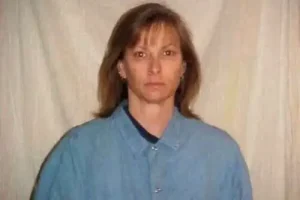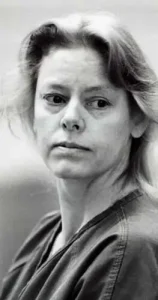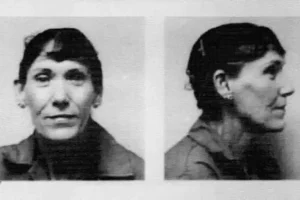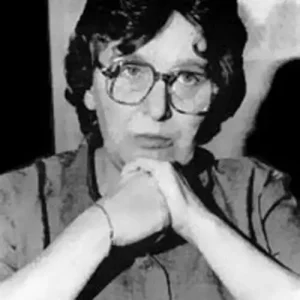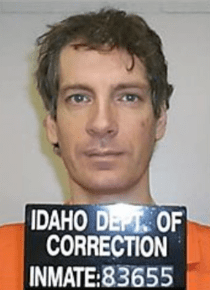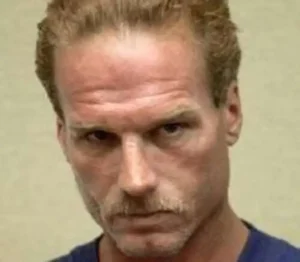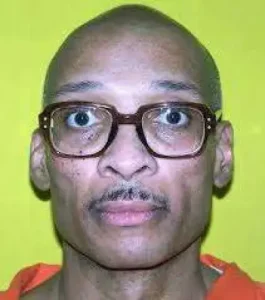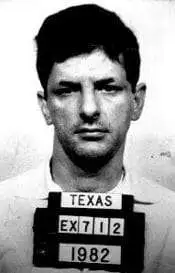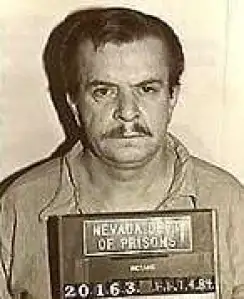
Clifford Olson was a serial killer from Canada who was responsible for eleven murders
According to court documents Clifford Olson was in and out of prison for the majority of his life before his killing streak would begin. In less than two years Olson would murder eight girls and three boys
- Christine Weller, 12,
- Colleen Marian Daignault, 13,
- Daryn Todd Johnsrude, 16,
- Sandra Wolfsteiner, 16,
- Ada Anita Court, 13,
- Simon Partington, 9,
- Judy Kozma, 14,
- Raymond King II, 15,
- Sigrun Arnd, 18,
- Terri Lyn Carson, 15,
- Louise Chartrand, 17,
Clifford Olson would finally be arrested. In a rather odd plea deal with police he would agree to plead guilty to all eleven murders if the RCMP (Royal Canadian Mounted Police) would pay him $10,000 per victim to be paid into a trust controlled by his wife
Clifford Olson would be sentenced to 11 life sentences however due to Canadian law he was able to apply for parole after serving twenty five years. Olson would first be denied parole in 1997, again in 2006 and in 2010.
Clifford Olson would die behind bars on September 30 2011 from cancer
Clifford Olson Photos

Clifford Olson Case
Short and stocky, his wavy brown hair curling around his ears, Clifford Olson entered a packed Vancouver courtroom on Jan. 11, 1982 carrying an Annotated Criminal Code. Ever the drama king, he looked around with his brown, almost black eyes and smiled at his audience, several of whom were the devastated parents of his victims in the largest serial murder case in British Columbia’s history. After each of the 10 charges was read, he responded “not guilty” in a clear flat voice.
Three days later Clifford Olson, 42, abruptly changed his plea. In a voice that began firmly, wavered and finally broke, he admitted his guilt to 11 counts of first-degree murder – the killing of 16-year-old Sandra Wolfsteiner had been added to the dreadful toll.
The bodies of the three boys and eight girls, aged between 9 and 18, had been found in secluded areas within a 90-kilometre radius of Vancouver. Some of the victims had been raped and sodomized, some were bludgeoned, others were stabbed and one was strangled. All had been drugged and killed in a murderous spree lasting only nine months, from November, 1980, through July, 1981, while Olson was out of prison on mandatory supervision.
“I do not have the words to adequately describe the enormity of your crimes, or to describe the heartbreak and anguish you have caused,” Mr. Justice H.C. McKay declared as the mother of one of the victims sobbed in the packed courtroom. After saying that there is “no punishment that a civilized country can impose that would be adequate,” the judge gave Olson 11 concurrent life sentences and recommended that he never be released.
You’d think that might have been the last anybody heard of Olson, aka the Beast of B.C. In fact, his diabolical antics continued for the rest of his life. Beginning with the infamous “cash for bodies” deal he struck with the RCMP in B.C. (with the approval of then federal Solicitor-General Robert Kaplan), Olson played the criminal justice system like a personal video game for the next three decades. He toyed with police and tabloid journalists, promising them details on unsolved crimes in return for privileges and media coverage; submitted poems and stories to literary contests to the horror of organizers and used his manipulative narcissistic personality and his quasi-knowledge of the law to taunt lawyers and the families of his victims.
He appealed for a new trial and early parole under faint-hope clauses, petitioned for parole on all but one opportunity after he had served 25 years behind bars, and used the Charter of Rights and Freedoms to mount dozens of frivolous and vexatious challenges. In two of his more bizarre legal submissions, he claimed variously that being denied a “Solid Pleasure Life-Sized Revolutionary Not Inflated Sex Doll” and the installation of Plexiglas to line the front of his cell to protect him from other inmates, amounted to cruel and unusual punishment and thereby contravened the Charter.
Olson never showed any remorse for his heinous murders. But the criminal justice system itself changed in response to his diabolical behaviour on both sides of prison walls. His crimes gave rise to the victims of violence movement, their representation at trials and parole hearings, and the establishment of a missing children’s registry; his incessant demands for parole led to an amendment of the Criminal Code barring multiple murders from applying for early parole under the faint-hope clause; and his ability to collect pension and old age income supplements resulted in the passage of Bill C-31 denying such payments to prisoners while they are incarcerated.
Nevertheless, each time Olson made headlines – the most recent occasion was when he appeared before the National Parole Board in 2010 – the families of his victims were traumatized again. Their children will never be restored, but at least now Clifford Olson has been silenced. When he died of cancer Friday at the age of 71, his legal challenges were finally over.
EARLY DAYS
Clifford Robert Olson was born in Vancouver B.C. on January 1, 1940, one of four children of a milkman, but grew up in nearby Richmond. Even as a school boy he was a bully and a petty thief, who tormented cats and dogs and was bold enough to snatch berries and flowers from backyard patches and then try to sell them back to the unsuspecting growers.
”He was always getting into fights at school and getting beaten up,” his father said in an interview. “One day he said to me, ‘Dad, I’m going to learn to be a boxer.’ As soon as he did, he began making the rounds of the boys who had beaten him up and evening the score. Maybe that’s his trouble – that chip on his shoulder.”
Yet, he didn’t always disappoint. His former boxing coach, Tommy Yule, had only positive memories of the “good boy” who was runner up in a Bronze Gloves tournament in 1954, and deemed the most sportsmanlike boxer four years later in a Golden Gloves tournament.
LIFE OF CRIME
Clifford Olson frequently played hooky and dropped out of school out after completing Grade 8. He lived with his parents until he was sent to jail for break and enter when he was 17.
Over the next quarter century, he spent all but four years behind bars, racking up more than 90 convictions and seven escapes from custody. A con artist with a charming but manipulative manner, Olson sometimes got early release for good behaviour, and other times had his sentence extended after escape attempts. Few trusted him for long and eventually he antagonized both guards and fellow prisoners.
He met his future wife Joan Hale, a short, nervous divorcee with reddish brown hair in February, 1980. They were married on May 15, 1981, in the People’s Full Gospel Chapel in Surrey, a month after their son Stephen was born.
Unbeknownst to his bride, Clifford Olson had already murdered three children: Christine Weller, and Colleen Marian Daignault, both 13 and from Surrey, and Daryn Todd Johnsrude, 16, from Coquitlam. Within days of his wedding, Olson had abducted and killed Sandra Wolfsteiner, 16, of Langley.
A month later he struck again, murdering 13-year-old Ada Anita Court of Burnaby. His sadistic appetite whetted, he increased the speed with which he sought new victims. In July, 1981, he killed no fewer than six children: Simon Partington, 9 and Terri Lyn Carson, 15 both from Surrey; Judy Kozma, 14 and Raymond King, 15, from New Westminster; Sigrun Arnd, 18, a German tourist and Marie Louise Chartrand, 17, from Maple Ridge.
Meanwhile, Clifford Olson was wearing out a pew at church, telling anybody who would listen that he had found God and weighing down his coffee table with a Bible. He even posted a solicitation on the church bulletin board advertising window-washing jobs for teenagers. Olson actually made his living as a scam artist and a thief.
Clifford Olson was finally arrested on Aug. 12, 1981 near Port Alberni on Vancouver Island on suspicion of trying to abduct two female hitchhikers in his car. By that time, the 41-year-old habitual criminal had spent more half his life behind bars and was facing more than a dozen outstanding charges. He was taken to Chilliwack for questioning and charged two days later with the murder of Judy Kozma, whose nude body with multiple stab wounds had been discovered on July 25.
THE CASH FOR BODIES DEAL
Finding the rest of the victims and extracting a confession out of Clifford Olson became the urgent preoccupation for police caught between trying to bring a murderer to justice without any concrete evidence and assuaging the horror of families desperate to know what had happened to their children and to reclaim what remained of their brutalized bodies.
That was the rationale behind the “cash for bodies” deal that was only revealed after Olson was sentenced in January, 1982. The police had agreed to pay Clifford Olson $30,000 for evidence on the four bodies they had recovered before his arrest in August, 1981, with an additional $10,000 for each subsequent murder site he identified or body he helped locate. Olson was so chuffed about the arrangement that he provided details about one murder free of charge – “a freebie,” as he liked to boast.
Before Clifford Olson gave up any gory details, however, he had insisted that the money was paid to his wife Joan, who had moved with their baby son to her parents’ home in the Kitsilano area of Vancouver. She had played the devoted trusting wife during his trial.
That all changed when she was called as a witness in a lawsuit brought by the families of seven of the victims. The group sued in the Supreme Court of B.C. in October, 1984 to have the $100,000 “cash for bodies” trust fund declared fraudulent and the remaining money given to them as compensation for the murder of their children.
Clifford Olson, who had reverted to her maiden name, Hale, at times sobbed and clutched a Bible. She testified that her husband was an alcoholic who frequently beat her and threatened to slash her throat. She also admitted that he had confessed his crimes to her after his trial. “What can I say, honey?” he apparently said. “I did it. It was the booze and the pills.” She divorced him in 1985.
The B.C. Court of Appeal unanimously ruled against the families in March, 1986, arguing that the RCMP payment “was not made as compensation for the deaths of the children.” Rather, it “was authorized … to obtain evidence to convict Olson of the murders.” The Supreme Court of Canada refused to hear the case on appeal later the same year.
OLSON’S PRISON RECORD
Clifford Olson was sent more than halfway across the country after his murder trial and incarcerated in Kingston Penitentiary in February, 1982. He spent 23 hours a day in his cell in a special “administrative segregation unit” in E-block, housing inmates who need protection from fellow prisoners. In his first seven years, he made five requests for a transfer and wangled a trip back to Vancouver after duping police with tales about his complicity in unsolved crimes.
After visiting the cell block in August, 1989, Globe and Mail justice reporter Kirk Makin described Clifford Olson as fit and tanned, and as unrepentant as he was notorious. “True to form, he instantly spat out demands and cunningly worded entreaties. Leaping back and forth from his cot to his desk, he shoved letters, writs and court documents through the bars.” The only time that Olson turned away from his obsessive interests in religion and mounting legal challenges, according to Makin, was the hour a day he spent running in the exercise yard.
Two years later E-Block had been shut down and Clifford Olson moved to H-Block. Even there, he was placed as far away from the others as possible and put into a specially reinforced cell with floor to ceiling Plexiglas covering the bars. Even his isolation couldn’t muffle the incessant sounds of his typing as he wrote pornographic and sadistic memoirs of his crimes, produced legal challenges, and, before authorities started screening his mail, composed revoltingly explicit and threatening letters to some of the families of his victims.
In 1992, after complaining about back pain, Clifford Olson was sent for X-rays to a Kingston hospital. Technicians found a handcuffs key, stolen from prison guards, tucked up into his rectum. That escape attempt thwarted, Olson was transferred, after almost a decade of fractious behaviour in Kingston, to the Special Handling Unit in the maximum-security federal penitentiary in Prince Albert, Sask.
And so it continued, with Clifford Olson using the system to apply repeatedly for parole, privileges and satisfaction under the Charter for what he deemed were the cruel and unusual conditions of his incarceration. When the Saskatchewan facility closed down in the summer of 1997, Olson was transferred back east to the super-maximum security Special Handling Unit in Sainte-Anne-des- Plaines, north of Montreal in Quebec.
His last futile appearance before the National Parole Board was in November, 2010. “This is the final time,” Clifford Olson told the board in disgust, his greying hair combed forward to camouflage its thinness. “Never again. I’m out.”
For once he was telling truth.
https://www.theglobeandmail.com/news/national/the-life-and-death-of-clifford-olson/article4197011/
Clifford Olson Videos
Clifford Olson: The Beast of British Columbia – Victims, Timeline, Plea Deal and Death
Clifford Robert Olson Jr. was a Canadian convicted serial killer who confessed to murdering 11 children and young adults aged between 9 and 18 in the early 1980s. His crimes took place entirely in British Columbia’s Lower Mainland, and all occurred within an 8-month period while he was on mandatory supervision after release from prison for prior fraud and theft offences.
Clifford Olson was not a criminal mastermind. He was a lifelong con artist and petty thief who learned to manipulate systems. In 1976, while serving time, he obtained favourable terms by acting as an informant against a cellmate, even coaxing a written confession. Olson later claimed it was discussions with that cellmate that led to his sexual interest in children and murderous intents.
Forensic psychiatrist Stanley Semrau, who interviewed Olson at length in prison, scored him 38 out of 40 on the Psychopathy Checklist, placing him among the highest-scoring offenders ever assessed in Canada.
Early Criminal Life
Born in Vancouver on New Year’s Day 1940, Clifford Olson had more than 40 convictions before age 40 for fraud, theft, armed robbery, forgery, escape, and indecent assault. He was charming, glib, and a compulsive liar, traits that later helped him lure children.
He married Joan Hale in 1981, shortly before his arrest. She was pregnant with their son when the plea deal was negotiated, a fact that became central to the national outrage that followed.
Clifford Olson was released to mandatory supervision in 1980 despite a long record of violence and sexual offences. That supervision failure became a key part of the public inquiry into his case.
The Murders: November 1980 to July 1981
Clifford Olson’s killing spree was rapid, disorganized, and escalating. He targeted hitchhikers, children at bus stops, and kids lured with offers of jobs, money, or alcohol.
1. Christine Weller, 12, Surrey. Abducted November 17, 1980. Her body was found more than a month later on Christmas Day. She had been strangled with a belt and stabbed repeatedly.
2. Colleen Marian Daignault, 13. Vanished April 16, 1981. Her body was found five months later.
3. Daryn Todd Johnsrude, 16. Abducted and killed April 22, 1981. His body was found less than two weeks later.
4. Sandra Wolfsteiner, 16. Kidnapped and murdered May 19, 1981.
5. Ada Anita Court, 13. Murdered in June 1981.
July 1981 was the deadliest month, with six victims in 29 days:
6. Simon Partington, 9. Abducted, raped and strangled July 2, 1981.
7. Judy Kozma, 14, New Westminster. Raped and strangled a week later. Her body was discovered July 25 near Weaver Lake.
8. Raymond King II, 15. Abducted July 23, raped and bludgeoned to death.
9. Sigrun Arnd, 18. A German tourist, raped and bludgeoned two days later.
10. Terri Lyn Carson, 15. Raped and strangled July 27.
11. Louise Chartrand, 17. The last victim identified, died July 30.
Most victims were strangled or bludgeoned, some were sexually assaulted, and several were stabbed. Olson later claimed responsibility for the savage murders of eleven young people, male and female, all ranging from ages 9 to 18.
Arrest
Clifford Olson had been on police radar for months due to his record and suspicious behavior around schools. He was arrested August 12, 1981, on suspicion of attempting to abduct two girls.
By August 25, he had been charged with the murder of Judy Kozma. Investigators suspected him in multiple disappearances but lacked bodies for several victims, which in Canada at the time made murder convictions difficult without a confession or remains.
The $100,000 Plea Bargain
What followed remains the most controversial deal in Canadian legal history. Olson offered to confess to all 11 murders and show the RCMP the location of the bodies not yet recovered. In return, authorities agreed that C$10,000 for each victim would be paid into a trust for his wife and then-infant son.
His wife received C$100,000 after Olson cooperated, the 11th body being a “freebie”.
The agreement was negotiated by RCMP and Crown prosecutors desperate to give families closure and to prevent further searches. The public learned of the payment only after Olson pleaded guilty in January 1982, sparking national fury. Parents said they were pressured to support the deal to recover their children’s remains.
Clifford Olson pleaded guilty to 11 counts of murder and was given concurrent life sentences to be served in Canada’s super-maximum security Special Handling Unit in Sainte-Anne-des-Plaines, Quebec.
At sentencing on January 14, 1982, Justice McKay remarked, “My considered opinion is that you should never be granted parole for the remainder of your days. It would be foolhardy to let you at large.”
Political Fallout
In 1983, MP Gordon Taylor introduced a private member’s bill in the House of Commons mandating Olson’s execution, notwithstanding his 1982 sentence and Canada’s 1976 abolition of capital punishment for murder. Numerous petitions supporting the bill were laid before the House before it was ruled out of order in 1984 as a bill of attainder.
The case directly influenced later reforms. It accelerated development of ViCLAS, the Violent Crime Linkage Analysis System, which links unsolved crimes across jurisdictions. The second episode of Da Vinci’s Inquest references this, with a detective remarking ViCLAS would have helped apprehend Olson sooner.
It also changed victim services. Families of Olson victims, including the Johnsrudes, became vocal advocates for the Canadian Victims Bill of Rights decades later.
Parole Hearings and the Faint Hope Clause
Canadian law allows first-degree murderers to apply for parole after 25 years, and the old faint hope clause allowed a hearing after 15 years.
Clifford Olson applied in 1997 under faint hope and was denied.
His second hearing on July 18, 2006, was a media circus. Olson made bizarre and false claims, including that the United States had granted him clemency for providing information about the September 11 attacks and that the hearing had no jurisdiction over him because of that. The board denied parole, stating he would kill again if freed.
Under Canadian law he could reapply every two years. He was again refused in November 2010. Each hearing retraumatized families, who were required to submit victim impact statements repeatedly, leading to later legislative changes limiting serial killer parole applications.
The Old Age Security Scandal
In March 2010, Canadians learned Olson was receiving two federal benefits while imprisoned: Old Age Security and Guaranteed Income Supplement, totaling C$1,169.47 monthly. All persons meeting residency requirements are eligible at age 65, and Olson turned 70 on January 1, 2010.
The Canadian Taxpayers Federation presented 46,000 petition signatures requesting termination. Prime Minister Stephen Harper called the payments outrageous and offensive. On June 1, 2010, the government moved to terminate Olson’s payments.
In September 2010, Olson mailed one of his OAS cheques to Sun Media reporter Peter Worthington with a note asking him to forward it to Harper’s re-election campaign, a final act of manipulation.
Bill C-31 subsequently passed, ending OAS and GIS payments to incarcerated offenders serving sentences of two years or more.
Illness and Death
In September 2011, media reported Olson had terminal cancer and had been transferred to a hospital in Laval, Quebec. He died September 30, 2011, at age 71, in prison custody.
His death prompted muted reactions from families. Many said relief, not celebration, was the dominant feeling after 30 years of parole hearings and media stunts.
Why Olson Still Matters for Canadian Law
- Plea bargains with money. No Canadian prosecutor has since offered cash for confessions. The Olson deal is taught in law schools as an ethical failure.
- Parole reform. The repeated hearings led to 2011 legislation ending faint hope for multiple murderers and later to Bill C-38, which allows the Parole Board to deny hearings for offenders deemed unlikely to ever be released.
- Victim rights. Families formed advocacy groups that influenced the 2015 Canadian Victims Bill of Rights, giving families the right to information and protection from offenders.
- ViCLAS and data sharing. Olson moved victims across jurisdictions in the Lower Mainland. Police forces did not initially link cases. ViCLAS, now used nationally, was designed to prevent that.
In Media
Olson’s case has been revisited repeatedly:
- The Investigation (2002 TV movie) focused on allegations RCMP bureaucracy delayed his arrest, starring Nicholas Lea and David Warner.
- Where Shadows Linger (2000) by William Leslie Holmes and Bruce Northorp, the RCMP officer who arrested Olson.
- Neil Gaiman’s The Sandman references the plea bargain in a panel discussion at a serial killers’ convention.
- Peter Worthington’s Predator: The Life and Crimes of Serial Killer Clifford Olson remains the most detailed account
How many victims did Clifford Olson have?
He was convicted of 11 murders of children and youths aged 9 to 18 between 1980 and 1981.
Why was Clifford Olson paid $100,000?
Police agreed to pay C$10,000 per victim into a trust for his wife in exchange for confessions and body locations. The 11th victim was unpaid.
Where did Clifford Olson die
He died September 30, 2011, in a hospital in Laval, Quebec, while in federal custody, of terminal cancer
What was his psychopathy score?
38 out of 40 on the Hare Psychopathy Checklist, assessed by forensic psychiatrist Stanley Semrau.
Was he ever paroled?
No. He was denied under the faint hope clause in 1997, denied again in 2006 and 2010, and died in prison