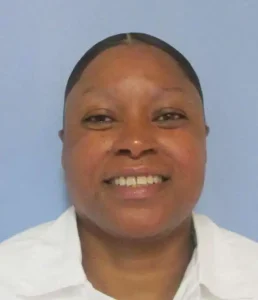
Michael King was sentenced to death by the State of Florida for the murder of Denise Lee
According to court documents Michael King would kidnap, sexually assault and murder Denise Lee
Michael King would be arrested, convicted and sentenced to death
Michael King was executed on March 17 2026 by lethal injection
Michael King Photos

Michael King Information
Name: KING, MICHAEL L
Race: WHITE
Sex: MALE
Birth Date: 05/04/1971
Initial Receipt Date: 12/14/2009
Current Facility: UNION C.I.
Current Custody: MAXIMUM
Current Release Date: DEATH SENTENCE
Michael King Case
[O]n January 17, 2008, at approximately 3:30 p.m., Nathan Lee returned to his home on Latour Avenue in North Port, Florida, to find his wife, Denise Amber Lee, missing. The doors were locked, but her keys, purse, and cellular telephone were in the house. The couple’s two sons, ages six and two months, were in a crib together, which was not typical. At around 4 p.m. that day, Detective Chris Morales of the North Port Police Department was notified that Denise Lee was missing. When Morales responded to the home on Latour Avenue, he found no signs of forced entry or a struggle, and the children were unharmed.
Earlier that day, between 1 and 2 p.m., a neighbor of the Lees was watching television from a position which provided a view of the street. During that time, she saw a green Camaro “creeping up and down my road going very slow.” The Camaro had a black “car bra,” which is a leather or vinyl casing across the front of the car which protects against impact from insects or rocks. The neighbor observed the car circle the street four or five times. When the neighbor walked outside to investigate because the driver appeared to be lost, the car pulled into the Lees’ driveway. The neighbor made eye contact with the driver but, believing that the operator of the vehicle had found the residence he was looking for, she returned to her house. Ten or fifteen minutes later, the neighbor again stepped outside and saw the Camaro depart from the Lees’ residence. The neighbor did not observe Denise Lee entering or being forced into the Camaro.
Later that day, between the hours of 5:30 and 6 p.m., Michael King unexpectedly arrived at the home of his cousin, Harold Muxlow. King was wearing a white shirt with a design. King asked Muxlow for a flashlight, a gas can, and a shovel, explaining that his lawnmower was stuck in his front yard. After Muxlow provided King the tools, King immediately left. As Muxlow was walking back to his house, he heard a female voice from the vehicle exclaim, “Call the cops.” Muxlow turned around and walked down the driveway toward King, asking what he was doing. King lifted his head from beside the passenger side of the car and replied, “Nothing, don’t worry about it.” Muxlow initially turned and began to walk toward his house but, curious, he turned around once again and walked to the edge of the street toward the car. There, he saw King crawling over the console in the Camaro and pushing the head of a person with shoulder-length hair down in the back seat. He also observed part of the person’s knee rise up. King then climbed into the driver’s seat and drove away.
Thinking the incident was suspicious, Muxlow drove to King’s residence to investigate if King had returned and whether a lawnmower was in fact stuck in the yard. When Muxlow arrived, he found neither King’s green Camaro nor a lawnmower in King’s yard. Muxlow placed an anonymous 911 phone call in which he provided a description of King’s vehicle and informed the dispatcher that a person might be in the described vehicle against her will.
At 6:14 p.m., the Sarasota County Sherriff’s Office received another 911 call. During trial, the parties stipulated that the female voice on this 911 call was that of Denise Lee. Harold Muxlow testified that a second, male voice also present on the 911 recording was that of his cousin, Michael King. The recording of the 911 call presented during trial was transcribed by the court reporter as follows: [n.1]
[n.1] ․ Due to the absence of the [complete] transcript, the text of the call is derived from the transcription of the court reporter and an audio recording of the 911 call that was included as part of the record on appeal. Brackets indicate words that the Court could hear but were not fully understood or transcribed by the court reporter.
DISPATCHER: 911.
[LEE: I’m sorry. I’m sorry. I just want to go—]
DISPATCHER: Hello?
[LEE: I’m sorry. I just want to see my family.]
MALE VOICE: Why did you do that?
LEE: I’m sorry. [I just want to see my family.]
DISPATCHER: Hello?
LEE: I just want to see my family again. Please.
DISPATCHER: Hello? Hello?
LEE: I just want to see my family again. Let me go.
DISPATCHER: Hello?
MALE VOICE: (Inaudible) the f**king phone.
LEE: Please let me go. Please let me go. Please let me see my family again.
MALE VOICE: No f**king problem.
LEE: Okay.
DISPATCHER: Hello?
(Inaudible).
LEE: I’m sorry.
[MALE VOICE: I was gonna let you go and then you go f**k around.]
LEE: [I’m sorry. Please] let me go.
MALE VOICE: Where’s my phone?
DISPATCHER: Hello?
[MALE VOICE: Now I’ve got to go to the next street because of him.]
LEE: I’m sorry. Please let me go.
MALE VOICE: What are you doing?
(Inaudible).
LEE: Please let me go, please. Oh, God, please.
[MALE VOICE: (inaudible) in front of my cousin Harold.]
DISPATCHER: Hello?
LEE: Please let me go, [God] please.
MALE VOICE: I told you I would.
DISPATCHER: Hello?
LEE: Help me.
DISPATCHER: What’s the address?
LEE: Please help me.
DISPATCHER: What’s the address that you’re at? [ (to supervisor): Coming off the North Port Tower.]
LEE: Please.
MALE VOICE: I’m not (inaudible).
DISPATCHER: Hello?
LEE: Please let me go.
DISPATCHER: What is the address that you’re at? Hello, ma’am?
LEE: Where are we going?
MALE VOICE: I’ve got to go up and around now because of what you did.
LEE: Up and around where?
MALE VOICE: Didn’t you see (inaudible). Exactly four streets—well, five streets over from your house.
LEE: I couldn’t tell (inaudible).
DISPATCHER: What’s your name, ma’am? Hello? What’s your name?
LEE: Please. My name is Denise. I’m married to a beautiful husband, and I just want to see my kids again.
DISPATCHER: Your name’s Denise?
LEE: I’m sorry.
DISPATCHER (to supervisor): I’m thinking too, that he doesn’t know.
LEE: Please, God. Please protect me.
DISPATCHER: Are you on I–75?
LEE: Where are we?
[MALE VOICE: What did you do with my cell phone?]
LEE: I don’t know. Please. Protect me, please.
DISPATCHER: Where are you at? Can you tell if you’re on I–75?
LEE: I don’t know where your phone is. I’m sorry.
[MALE VOICE: You be honest with me.]
LEE: Can’t you just tell me where we are?
DISPATCHER: Are you blindfolded? If you are, press the button.
LEE: I don’t have your phone. Please, God.
(Inaudible).
LEE: I don’t have it. I’m sorry.
DISPATCHER: Denise? Do you know this guy?
[MALE VOICE: Be honest.]
LEE: I don’t—I don’t have it. I’m sorry.
DISPATCHER: Denise, do you know this guy? (to supervisor: She might have the phone laid down and not hear a thing I’m saying too. He keeps saying a phone.)
LEE: I don’t know where it is. Maybe if I could see I could help you find it.
(Inaudible).
[LEE: No, sir.]
DISPATCHER: Denise?
LEE: I’m looking for it. Uh-huh?
DISPATCHER: How long have you been gone from your house?
LEE: I don’t know.
DISPATCHER: How long?
LEE: I don’t know.
DISPATCHER: Do you know how long you’ve been gone from your house?
(Inaudible).
DISPATCHER: What’s your last name?
LEE: Lee.
DISPATCHER: Lee?
LEE: Yeah.
DISPATCHER: Do you know—
LEE: I don’t know where your phone is.
DISPATCHER: Your name is Denise Lee?
LEE: Uh-huh.
DISPATCHER: Can you tell at all what street you’re on?
LEE: No.
DISPATCHER: Do you know this guy that’s with you?
LEE: No.
DISPATCHER: You don’t know him from anywhere?
LEE: No. Please. Oh, God, help me.
DISPATCHER: What’s your address? What’s your home address; do you know?
(Inaudible).
LEE: I don’t know. Please just take me to my house. Can you take me home, on Latour, please?
DISPATCHER: Can you see or do you have a blindfold on?
LEE: I can’t see. Where are we?
(Inaudible).
DISPATCHER: Can they turn off the radio or turn it down?
LEE: I can’t hear you. It’s too loud. Where are we?
(Inaudible).
LEE: Are you going to hurt me?
MALE VOICE: Give me the phone.
LEE: Are you going to let me out now?
MALE VOICE: As soon as I get the phone.
LEE: Help me.
At that moment, the call was terminated. The cellular telephone number from which the 911 call was dialed was identified as belonging to Michael King. Law enforcement proceeded to King’s residence in North Port and forcibly entered the premises; however, neither Lee nor King was there.
During the early evening of January 17, while Shawn Johnson was stopped at a traffic light, he heard an adult female voice screaming for help. At the North Port police station, Johnson subsequently selected Michael King from a photo lineup as the man who was operating the green Camaro from which the screams for help were emanating. Johnson also identified King as the driver during trial.
On that same day, at approximately 6:30 p.m., Jane Kowalski was stopped at a traffic light on Highway 41 when she heard someone screaming and a “commotion” coming from the Camaro that was in the traffic lane beside her. Kowalski made eye contact with the male driver of the Camaro. She subsequently identified King from a photo lineup and also during trial as the man who was driving the car. Kowalski described the screaming as, “Horrific, terrified. I’ve never ever heard anything like that in my life.” As she watched, the man driving the Camaro turned around and began to push something down in the backseat. After the driver finished the downward motion, Kowalski saw a hand rise up from the back seat and begin banging loudly on the passenger-side window. When the traffic light turned green, Kowalski hesitated with the intent to be in a position to read the license plate of the Camaro as it passed. However, King refused to drive forward and, when Kowalski began to slowly roll forward, he changed traffic lanes and pulled behind her. When Kowalski realized that King would not pass her, she dialed 911 and described her observations of the Camaro and the behavior of the driver. While speaking with the dispatcher, Kowalski observed the Camaro make another lane change and then make a left turn onto Toledo Blade Boulevard, heading toward Interstate 75. Due to the traffic, she was unable to change lanes and follow the Camaro.
At 9 p.m. that evening, Deputy Christian Wymer and State Trooper Edward Pope were posted at Toledo Blade Boulevard near Interstate 75 watching for a green Camaro. From a series of “be on the lookout” (BOLO) announcements, the officers had a description of the car, a license plate number, and driver’s license photos of Lee and King. At approximately 9:10 p.m., a green Camaro matching the description given in the BOLO drove from Toledo Blade Boulevard onto the on-ramp for I–75 southbound. Trooper Pope followed the Camaro and eventually caused it to stop. Based upon the information he had at that time, Pope conducted a felony stop, i.e., he placed his vehicle in a tactical position and drew his weapon. He ordered the driver to exit the vehicle multiple times, but the driver did not comply. Only after a fifth command, during which Pope advised that if the driver did not comply, he (Pope) would fire into the vehicle, the door opened and the driver exited from the front door backwards, leaning over the console toward the passenger seat. Pope identified the driver as a “perfect match” to the person on Michael King’s driver’s license.
During the stop, Pope observed that King was wet from the waist down and had mud resin on the base of his shoes. King was wearing jeans and a shirt with a camouflage pattern. [n.2]. In King’s pockets, Pope discovered a wallet that contained King’s driver’s license with a photo that matched the picture that Pope had previously received. Pope also recovered a cellular phone, from which the battery and the SIM card had been removed. On the bra of the Camaro, Pope observed hair strands, and he also observed hair strands on the spoiler with what appeared to be blood pellets. A viscous, sap-like substance was present on the bra of the car. Inside the vehicle, Pope observed a gas can on the passenger seat and a cellular phone battery on the passenger-side floorboard. Pope observed a blanket and a ring in the backseat; however, Lee was not in the car. During trial, the parties stipulated that the ring found in the backseat of the Camaro belonged to Denise Lee.
[n.2] Harold Muxlow testified that King was wearing a white shirt with a design when he arrived to borrow the shovel, gas can, and flashlight. Accordingly, King changed his shirt sometime between the time he left Muxlow’s residence and when the police detained him on I–75.
After the car was towed to the North Port Police Department, a shovel with dirt caked on the underside was discovered in the back seat. During trial, Harold Muxlow identified the shovel as the one he gave King on the afternoon of January 17. A palm print found on the outside of the driver’s-side window of the Camaro was identified as belonging to Denise Lee. DNA testing on the hair recovered from the outside of the Camaro matched the known profile of Lee to the exclusion of 110 trillion other Caucasians. Hair found in the backseat of the Camaro matched Lee’s DNA to the exclusion of 9 trillion other individuals. The blanket located in the backseat tested positive for blood and matched Lee’s DNA to the exclusion of 9 trillion other individuals. Blood found on the outside of the Camaro matched the DNA profile of Denise Lee ․ Similarly, the sap-like substance found on the bra of the Camaro matched the known DNA profile of Denise Lee ․
After a search warrant was obtained, a thorough search of King’s home was conducted. ․ Upon entering the master bedroom, the technician noted that a yellow blanket covered the window. A Winnie the Pooh blanket, pillows, and a wad of duct tape with hair attached were on the floor. ․
In the kitchen, the technician observed an intact roll of duct tape on the bar. A garbage bag in the pantry contained more duct tape with hair attached. The hairs that were attached to the duct tape in the garbage bag matched the known DNA profile of Denise Lee to the exclusion of 110 trillion other Caucasians. Swabs taken from the ends of the wadded duct tape located in the master bedroom matched the known DNA profile of Michael King to the exclusion of one quadrillion other Caucasians. The Winnie the Pooh blanket found in the master bedroom tested positive for blood and semen. The semen on the blanket matched the known DNA profile of King to the exclusion of 1.1 quadrillion other individuals, and Lee could not be excluded as the contributor of the blood.
On January 18, during the subsequent effort to locate Denise Lee, an individual involved in the search noticed an area of land near Plantation Boulevard in North Port where the earth appeared to be disturbed. In the vicinity of the disturbed area were two small piles of sand that were out of place for the normal terrain. In those two piles of sand were what appeared to be blood. According to a crime scene technician, it appeared that the blood had been on the ground previously and the sand had been placed on top of the blood because the sand had absorbed the blood. A forensics team commenced the excavation of the disturbed area on the morning of January 19. As the team removed the earth, they noticed scallop marks, which were consistent with a round-nose shovel digging straight down into the earth. At a depth of three feet one inch, the team discovered the nude body of Denise Lee, lying on her side in a fetal position. A gunshot wound was visible on the body, and there was water in the bottom of the hole.
A couple of days after the body of Lee was recovered, a single nine-millimeter shell casing was discovered in the grass near the gravesite, but a projectile was never found. A couple of hundred yards away from the gravesite, a crime scene technician recovered a pair of boxer shorts owned by Nathan Lee—but often worn by Denise Lee—and a shirt belonging to Denise Lee. The boxer shorts tested positive for sperm cells, and those cells matched the DNA profile of King to the exclusion of 3.5 trillion other individuals.
․
The medical examiner testified that Denise Lee died from a single gunshot wound to the head. The size of the wound indicated that the bullet could not have been larger than one centimeter, and that the projectile that caused the injury could have been from either a nine-millimeter or a thirty-eight caliber weapon. Further, the wound was consistent with the gun having been placed against Lee’s head at the time it was fired. The location of the entrance wound, to the right of Lee’s right eyebrow, led the medical examiner to conclude that the gun would have been in Lee’s field of vision if her eyes were open. The medical examiner further explained that when the gun was discharged, Lee’s eye exploded, and he opined that the sap-like substance located on the bra of the Camaro could have been Lee’s ocular fluid. According to the medical examiner, there was aspirated blood in Lee’s lungs, which indicates that Lee continued to breathe for a period of time after the wound was inflicted.
With regard to the rest of Lee’s body, two pieces of duct tape were removed from her hair during the autopsy. The medical examiner found bruises on Lee’s wrists and, due to their same general location on each wrist, concluded that they could have been caused by ligatures and were consistent with defensive injuries. The medical examiner noted that Lee had vaginal bruising and anal tearing, both of which were caused by insertion trauma. The medical examiner concluded from the condition of the injuries that they were inflicted pre-mortem and were nonconsensual. Semen recovered from Lee’s vagina matched the DNA profile of King to the exclusion of 1 quadrillion other Caucasians.
The jury convicted King of first-degree murder, involuntary sexual battery, and kidnapping.
https://caselaw.findlaw.com/fl-supreme-court/1768573.html
Michael King Sentenced To Death
A judge has agreed with a jury’s decision and sentenced
Michael King to death for the kidnapping, rape and murder of a North Port
mother.
In September a jury voted 12-0 in favor the death penalty for King, who was
convicted last August for killing Denise Amber Lee nearly two years ago.
DNA evidence and a 911 call Denise Lee made from King’s cell phone tied him
to the crimes. Lee’s cries for help were heard on one of several 911 calls made
regarding the abduction.
One motorist was able to describe the car and its location, but the call was never
relayed to patrol officers looking for the 21-year-old mother of two.
Concerns about King’s competency to finish the penalty phase of his murder trial
surfaced during the trial, but judge Deno Economou ruled he was competent after
hearing from two psychologists who evaluated King
Judge Sentences Michael King to Death.pdf
Michael King News
A 21-year-old Florida mother was taking care of her two sons when she suddenly vanished from their home in 2008. Denise Amber Lee’s story ended in tragedy, but her quick-thinking proved vital in helping police catch the man who killed her.
That Jan. 17, Denise’s husband, Nathan Lee, returned to their North Port home after work around 3:30 p.m. to find their children Noah and Adam, who were 2 years old and six months old at the time, alone and placed in the same crib.
Unable to locate Denise, Nathan dialed 911 to report her missing. The call went to the Sarasota County 911 call center, triggering a massive search.
The search for Denise quickly kicked into high gear. Denise’s father, Rick Goff, was a sergeant with the nearby Charlotte County Sheriff’s Office and joined in the effort to find her.
An early clue came when a neighbor said she saw an unusual green Camaro pull into the Lees’ driveway, only one hour before Nathan arrived home.
However, the search took a dark turn when local police got another 911 call — from Denise herself, bravely placed using her abductor’s cell phone. She secretly communicated with the 911 operator while speaking to her captor.
“Please let me go. Please let me go. I just want to see my family again,” Denise is heard saying on the recorded call heard in Friday’s episode of “20/20.” “My name is Denise. I’m married to a beautiful husband and I just want to see my kids again.”
MORE: How a California family’s disappearance ended with a grisly desert discovery
In an exclusive new interview with “20/20” co-anchor Deborah Roberts, Chris Morales, the lead detective on the case, said that this call from Denise confirmed their fears.
“When that 911 call came in, we absolutely knew that she was abducted,” Morales said.
Investigators traced the number to an unemployed plumber, Michael King, who was going through foreclosure and owned a green Camaro. He had no relation to her at all, but when police searched King’s house, they found a hair tie belonging to Denise and duct tape with long brown hair stuck to it which authorities suspected came from Denise.
Another call from an eyewitness offered crucial real-time details about the abduction.
Jane Kowalski, who was driving down a highway in the area that evening, called 911 to report seeing a Camaro with a person that she thought was a child screaming and banging on the window in the back seat.
“I looked over and I see the guy, it’s clear as day,” Kowalski said in the call. “There’s the little window in the back and the hand’s coming up and just hitting that window.”
The call was routed to Charlotte County 911 dispatch, which is distinct from the neighboring Sarasota County 911 dispatch team where Denise’s 911 call was received.
Kowalski’s call was not immediately dispatched to the police searching for Denise. The information from the call was initially written on a piece a paper instead of being entered into the system, according to the Charlotte County Sheriff’s Office, which investigated the incident.
“It was a major screw-up. When I say major, I mean it could have saved her life,” Goff, Denise’s father, told “20/20.”
The Charlotte County Sheriff’s Office maintained that dispatching the call properly would not have made a difference in locating Denise.
“The assumption is that Charlotte County screwed up and could have saved this girl’s life,” Charlotte County Sheriff John Davenport said at a news conference in 2008. “I’m telling you that until the facts come out here, that’s the wrong assumption to make.”
The internal investigation into the call found that procedure had been violated by the call not being dispatched immediately, and two dispatchers associated with the call were temporarily suspended, given remedial training and six months of probation.
Approximately five hours after Denise was reported missing, police found King when the Florida Highway Patrol pulled him over in the green Camaro. He was soaking wet and in possession of a gas can and a dirty shovel. A heart-shaped ring belonging to Denise was also eventually found in King’s car.
Two days later, police found Denise’s body in nearby woods. She had been sexually assaulted, shot and buried in a grave four feet deep.
“I was a big baby when that happened, I can tell you. Being kicked in the groin or something because it’s like, I’m not so tough after that. She was my firstborn baby girl,” Goff said.
King was then charged with murder in the first degree, kidnapping, and sexual battery. His defense team argued he was innocent, pointing to the fact that the murder weapon was never recovered.
Meanwhile, prosecutors presented forensic evidence that linked King to Denise from her hair and personal belongings that were found in his home and Camaro.
King was convicted by a jury in less than two hours on all counts and sentenced to death in September 2009.
MORE: Colorado woman’s stalker turns out to be husband in shocking murder case
Denise’s family has since dedicated their lives to bringing awareness to the 911 system.
Her sister Amanda became a 911 dispatcher and has remained in the industry. Nathan started the Denise Amber Lee Foundation and travels all over the country sharing Denise’s story with 911 emergency workers, hoping to prevent what happened in Denise’s case from ever happening again.
In her name, Denise’s family also helped pass the Denise Amber Lee Act, establishing new statewide standards for 911 operator and dispatcher training that requires them to undergo more than 200 hours of training.
Denise’s now-teenage children, Noah and Adam, also shared their mother’s story with ABC News’ Roberts as part of their first television interview in this week’s “20/20,” as a way to honor her life.
“We’re a part of her, and I feel like people hearing from us can see how important she was, how amazing she was, and see how big of a hole that is left because she’s not here,” Adam said.
How a Florida woman’s desperate final acts changed 911 forever
Michael King Execution
Florida has executed a death row inmate for the rape and murder of a stay-at-home mom whose death exposed the vulnerabilities of the 911 system nationwide and led to reform within the industry.
Michael King, 54, was executed by lethal injection on Tuesday, March 17, for the kidnapping, rape and murder of 21-year-old Denise Amber Lee. King abducted the married mother of two young sons from her home in broad daylight on Jan. 17, 2008, less than an hour before Lee’s husband returned from work.
Lee may have survived the ordeal if not for the 911 dispatchers who failed her.
A driver who heard Lee screaming for her life and saw her struggling in the backseat of King’s car called 911 and stayed on the line for nine minutes, giving dispatchers real-time updates on Lee’s location as police swarmed the region looking for her. But through a series of mistakes and apparent incompetence, the dispatchers never got the information to police who were seconds away.
Within a few hours of the call, King took Lee to a wooded area, fatally shot her in the face and left her body in a shallow grave.
Now just over 18 years later, King was pronounced dead in Florida’s execution chamber at 6:13 p.m. ET on Tuesday. As he died, Lee’s widower, oldest son, parents and siblings stood as witnesses, all dressed in pink for her favorite color.
King did not apologize or ask for forgiveness as he spoke his last words, according to media witness The Associated Press.
“Since finding Jesus in prison, I have tried to live as his disciple obeying the two great commandments: To love God with all my heart, my mind and all my being, and to love my neighbor − to include everyone − my family, Denise Lee’s family, everyone in the gallery,” and the execution team, he said in in what the AP said were nearly inaudible words relayed by Gov. Ron DeSantis’ office.
Here’s what you need to know about the execution, how 911 dispatchers botched Lee’s rescue and more about who Denise Amber Lee was.
After he witnessed the execution, Denise Amber Lee’s father called his daughter a “hero” and Michael King “a coward.”
“The only thing that made him brave that day is that he had a 9 mm gun to my daughter’s head,” said Rick Goff, a police detective who was a sergeant with the Charlotte County Sheriff’s Department at the time of the murder
He said his daughter showed so much bravery in the back of King’s car, planting her wedding ring and many of her hairs in the vehicle so that investigators would be able to definitely prove that she had been it. The evidence proved critical at trial.
“She took a killer off the street,” Goff said. “She saved a lot of people’s lives by what she did.”
Denise Amber Lee’s husband, Nathan Lee, said that he was glad the execution was over so his family can focus on moving forward. His oldest son, who was 2 when his mother was murdered, said the execution gave him a sense of closure.
“I, unfortunately, didn’t get the opportunity to know her and be raised by her,” Noah Lee said.
Her younger brother, Tyler Lee, said the fact that King didn’t apologize or show any remorse “really shows the true coward he is.”
On the afternoon of Jan. 17, 2008, 21-year-old Denise Amber Lee was at home in North Port, Florida, doing what she loved: taking care of her sons, 2-year-old Noah and 6-month-old Adam. Her husband, Nathan Lee, was working one of his three jobs that supported the family.
A man named Michael King was driving around their neighborhood, apparently looking for victims, when he spotted Lee on her front porch, trimming Noah’s hair.
No one saw what happened, but King was able to kidnap Lee at gunpoint. When Nathan Lee arrived home less than an hour later around 3:20 p.m., he found the house locked. His sons were inside, and so were Denise Lee’s purse, keys and phone. Knowing something was terribly wrong, he called 911. Denise Lee’s father, a local sheriff’s sergeant, helped deploy a massive police response.
Roughly four hours after the kidnapping − as police swarmed the area looking for her − Denise Lee was able to use King’s phone to call 911. Unbeknownst to him for more than six minutes, the line was open and the dispatcher could hear everything. The recording of the call is harrowing and gut-wrenching as Denise Lee sobs and begs for her life.
“I just want to see my family. Please let me go,” she screams. “God help me!”
For over six minutes, the dispatcher sounds at times indifferent and at times annoyed. She says “Hello” 13 times amid Lee’s hysterical cries, and continuously asks for her name, location, what her address is, and how long she’s been gone from her home, even though it’s apparent that Lee cannot speak freely and even after Lee gives her some of those answers. The dispatcher does not express empathy or offer words of comfort and at one point, she asks Lee if the kidnapper can turn the radio down.
About 15 minutes later, another 911 call comes in from a woman named Jane Kowalski, who sees Denise Lee slapping the back window of King’s car and hears her screaming for help.
For many minutes, Kowalski relays the car’s precise location, information that could have led officers straight to her. But 911 dispatchers didn’t get the critical information to the many officers frantically searching for Denise Lee. The dispatcher who took the call wasn’t entering the information into a computer, which angered her fellow dispatchers, and a dispute among the three is largely responsible for the failure, said Nathan Lee, who later filed a civil lawsuit over the matter that the Charlotte County Sheriff’s Department settled in 2012 for $1.2 million.
As part of the settlement, the sheriff’s office did not admit any wrongdoing. Two of the dispatchers were suspended for a few days, Nathan Lee said.
Today, Nathan Lee runs the Denise Amber Lee Foundation, which is dedicated to improving 911 system across the country. Lee travels throughout the nation and tells his wife’s story to dispatchers in hopes that no one goes through what his wife did.
As a result of the foundation’s work and lessons learned from Denise Lee’s murder, he said a number of states have passed legislation beefing up training requirements for dispatchers, including Florida. His wife’s case is so infamous in the industry, he said that “trainers and dispatch centers all over the country tell all new hires about Denise.”
“She mattered and she’s making a difference,” Nathan Lee said. “And that’s all you can do after this. Just hope that she didn’t die in vain.
Denise Amber Lee was the daughter of a sergeant with the Charlotte County Sheriff’s Department, and grew up with a brother and sister Englewood, Florida, just south of Sarasota on the Gulf Coast.
She started dating her future husband when they connected while in the same calculus class at a local community college. Nathan Lee recently told USA TODAY that he knew pretty quickly that Denise was the one for him
“Obviously she was beautiful … She was intelligent, she was really smart, and I could tell she was a little bit goofy, which I really liked,” he told USA TODAY. “Once we started dating, I knew really quickly very early. I was pretty sure I met my future wife.”
He said it was the way she looked at him. “Like I was the most important person on the planet to her,” he recalled.
When Denise became pregnant, both the couple’s parents wanted them to get married, he said. His proposal wasn’t all that romantic but it says everything about how Denise and Nathan were perfect for each other.
“We were just sitting on our couch in our apartment and I pretty much asked her, ‘What are you thinking about the whole marriage thing?'” he recalled. “She was like, ‘I’m fine getting married.’ And I’m like, ‘I’m fine getting married. So we went down to Walmart and got her engagement ring.”
He said that “it sounds really cheesy, but we didn’t care.”
“She just wanted to marry me and I wanted to marry her,” he said. “We didn’t care how fancy it was. She just loved me.”
Though Denise had wanted to become a lawyer, that took a back burner after the couple married when she was 19 and had their first son, Noah. Their second son, Adam, came about 18 months later. Denise wanted a daughter after that, and was considering a career as a children’s speech therapist, something she had become passionate about as she researched why her oldest son was taking a bit longer to start talking.
“She loved kids. I don’t think she realized how much she loved kids until she had them,” Nathan Lee said. “As soon as she held Noah in her arms for the first time, she fell in love. The same with Adam. She was definitely made for it.”
Michael King was a 36-year-old, out-of-work plumber who had no serious criminal history at the time of Denise Lee’s murder. He grew up in Pontiac, Michigan, with three brothers, and had moved to North Port, Florida just days before before he killed Lee.
King’s relationships with women were troubled, with his own wife walking out on him and calling him meek and deceitful, according to an archived news story in the Sarasota Herald-Tribune, part of the USA TODAY Network.
King had faced allegations of sexual harassment from various women, and one woman said he had raped her, but none of the accusations were reported to police, the Herald-Tribune reported.
Family members reported that King could tell tall tales, was somewhat dim-witted and acted like an “oddball” at times. They attributed his behavior to a childhood sledding accident in which King’s head crashed into a metal barn support − an injury that caused buzzing in his head at night even as an adult, his family told the newspaper.
King’s attorneys had recently argued for a stay of execution to the U.S. Supreme Court, citing concerns over how the state is carrying out lethal injections. The state’s Attorney General’s Office dismissed their claims as “nothing more than stalling for time.”
His last meal before being executed included pizza, ice cream and soda.
Among the witnesses to the execution were Denise Lee’s husband, parents and siblings.
“The word ‘closure’ is thrown around so loosely. You don’t get closure in these situations,” Nathan Lee told USA TODAY ahead of the execution. “The day he was sentenced we were all standing out in front of the courthouse, and we all knew that when this day comes we need to be there. We need to be there for Denise in solidarity.”
Michael King’s execution is the seventh in the U.S. this year and the fourth in Florida alone as the Sunshine State continues a rapid rate of carrying out executions.
Last year, 47 inmates were executed in the U.S., a number that hadn’t been seen since 2009. Of those executions, a state record 19 were in Florida, or about 40 percent. Florida Gov. Ron DeSantis began signing more death warrants than any other governor in Florida history last year, and the uptick remains steady.
DeSantis has said that the inmates being executed are the worst of the worst and that he wants to bring closure to victim who’ve waited sometimes decades for justice.
The next execution in the U.S. is that of James Duckett in Florida on March 31. Duckett was convicted of raping and murdering 11-year-old Teresa Mae McAbee in 1987 while he was a 30-year-old rookie police officer in Mascotte, about 30 miles west of Orlando.
Killer of stay-at-home mom whose death led to 911 reform is executed