Danny Rolling was a serial killer that was executed by the State of Florida for a series of murders
According to court documents Danny Rolling would murder five students in a four day period
- Danny Rolling would break into the home of Sonja Larson and Christina Powell. Both of the young women would be stabbed to death and Powell was sexually assaulted
- The next day Danny Rolling would break into the apartment of 18-year-old Christa Hoyt who was stabbed to death
- A day later Danny Rolling would break into the home of Tracy Paules, 23 years old, was living and Manny Taboada, also 23. Taboada would be fatally stabbed as he slept and Tracy would be sexually assaulted and murdered
Danny Rolling would be arrested, convicted and sentenced to death. While on death row Rolling would confess to three additional murders and the attempted murder of his father
Danny Rolling would be executed by lethal injection on October 25 2006
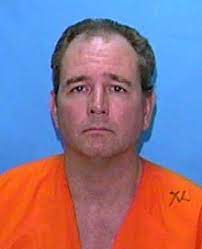
Danny Rolling Photos
Danny Rolling FAQ
When Was Danny Rolling Executed
Danny Rolling was executed on October 25 2006
Danny Rolling Case
Danny Harold Rolling, the murderous serial rapist and mutilator who paralyzed an entire college town with fear, didn’t give a last word Wednesday before he died in Florida’s death chamber. He sang his own hymn.
While restrained in a gurney, Rolling turned his head and briefly gazed with pale blue eyes at the mother of one of his five victims, then sang in a haunting Louisiana drawl of angels, mountains and, in a reference to St. Paul, of seeing “through a glass now, darkly.” For three minutes, as the lethal-injection drugs were about to pump into him, Rolling chanted the refrain, ”None greater than thee, Oh Lord. None greater than thee.” He continued to sing or speak in the windowed chamber after the microphone was cut. Never once did he mention sorrow or regret for his deadly Gainesville rampage 16 years ago that snuffed out five young people. Nor did he sing of the pain it caused, or ask for forgiveness.
And there was little forgiveness coming from the dozen family members in the witness room that was packed with 30 other spectators. Ricky Paules, the mother at whom Rolling had glanced, said she had one reaction: “Hatred. Very, very bitter throughout the whole thing. I saw his breath go out of him. . . . We waited for this time. And justice was done.” With Rolling’s death, she said, she could remember only her daughter, Tracy Paules.
Rolling, 52, was pronounced dead at 6:13 p.m., 13 minutes after he started singing and two minutes after his body stopped quivering and his jowls fell, puffed and discolored. He was the 63rd person executed since 1973, when Florida reinstated the death penalty.
In only one respect did Rolling’s death mirror that of his victims — he was bound and helpless. But unlike his victims, Rolling wasn’t attacked by ambush while he slept. His victims were stabbed so hard with his U.S. Marine Corps-style KBAR knife that their chipped and slashed bones were later shown to the jury. After Rolling was pronounced dead, the staff at Florida State Prison wheeled his body out. In contrast, Rolling posed his mutilated victims in sexually provocative positions and kept body parts as trophies.
`EMOTIONAL DAY’
”I’m a nurse, and I’ve seen my patients die. And they died a much more horrific death than what this man suffered through, that’s for sure. He relaxed, went to sleep, did not feel anything,” Dianna Hoyt, stepmother of victim Christa Hoyt, said later. “Today’s been a very surreal day for me. It’s like a dream, walking through a dream.”
Outside the death chamber in a nearby pasture, anti-death penalty protesters sung Kumbaya and Blowin’ in the Wind. Dozens of media satellite trucks sprouted in another area, in a scene reminiscent of the 1989 electric-chair execution of Florida’s most notorious killer, Ted Bundy. A year after Bundy’s death, Rolling arrived in Gainesville on a Greyhound bus, pitched a tent in the woods and recorded a tape of self-written songs for his family. Years later, at an appeals hearing, Rolling broke out in song in honor of a woman he asked to marry him from prison.
Reared Pentecostal, Rolling sought spiritual advice on his last day from a minister of the church. Prosecutors and Rolling himself said he swung between deep faith and pure evil. At some point, Rolling later said, he vowed to kill a person for each of the eight years he had spent in prisons in Georgia, Alabama and Mississippi. In addition to the five Gainesville murders, Rolling is suspected of killing a family of three, the Grissoms, in his native Shreveport, La.
ANOTHER MOTIVE
Another motive for his killings: Rolling later said in one of his confessions that he wanted to become a ”superstar.” His tools were simple: his Ka-Bar knife; duct tape; a handgun and a screwdriver for break-ins. For his first double homicide in Gainesville, he didn’t even need the screwdriver or gun when he saw the door was unlocked at town house 113 in the Williamsburg Village Apartments.
Rolling found Christina Powell, 17, sleeping downstairs. Upstairs, Sonja Larson was asleep as well. He bound them both, raped one and stabbed them to death. Their bodies were found the Sunday before the fall semester was to begin at the University of Florida. They hadn’t even unpacked all their boxes. The next morning, 18-year-old Christa Hoyt was found decapitated, her head wedged on a bookshelf. And the following day, Paules and her apartment mate friend, Manny Taboada, both 23, were found dead.
The town of Gainesville was in a panic. Scores of state and federal police swept in and drew blood samples from a number of men. A rumor hot line produced numerous bad leads, and whispers that police were hiding more bodies to cover up an even more massive slaying. Hundreds of University of Florida students disenrolled. Others slept a dozen to a house. Deadbolt locks flew off the shelves. So did guns.
Unknown to authorities, Rolling was arrested shortly after the killings on an unrelated charge of robbing a grocery store. Investigators focused on him at the suggestion of Louisiana authorities investigating the Grissom killings.
On Wednesday, that long-ago sweltering August seemed far away. The day was crisp and the emotions were far more muted. Death-penalty supporters whistled and clapped with word of Rolling’s demise. Opponents methodically banged a hammer on an anvil. Tonya Wilson, 34, said she attended to remember her roommates, Larson and Powell, with whom she was to room in 1990. ”I’m here for Christi and Sonja,” she said, holding back tears. “I told them I would be from the beginning.” She said she’s glad Rolling is finally dead, but wishes the punishment better fit the crime.
http://www.miami.com/mld/miamiherald/15849830.htm
Danny Rolling Videos
Danny Rolling: The True Story of the Gainesville Ripper
When students returned to Gainesville for the fall semester in 1990, they expected syllabus week and house parties. Instead, they found police tape, helicopters, and a killer who posed bodies to shock whoever opened the door. Danny Rolling, later branded the Gainesville Ripper, murdered five young people between August 24 and August 27, and confessed years later to three more in Louisiana.
This long-form guide gives you everything WordPress publishers need for an authoritative, SEO-strong post: a verified timeline, victim profiles, investigation missteps, trial strategy, cultural impact, and the psychology behind the crimes. It is built for readers searching for truth, not sensationalism, and for creators who want evergreen traffic around one of America’s most referenced serial murder cases.
Who Was Danny Rolling?
Daniel Harold Rolling was born May 26, 1954 in Shreveport, Louisiana, and died by lethal injection in Florida on October 25, 2006. To the public he became the Gainesville Ripper. To investigators he was a drifter with a military knife, a pistol, and a pattern of burglary that escalated into sexual homicide.
Rolling did not fit the Hollywood loner stereotype completely. Prosecutors noted he had what they called a chameleon-like quality and had dated normally at times. He also craved notoriety, telling people he wanted to be as infamous as Ted Bundy, who had been executed in Florida the year before his own murders.
Early Life in Shreveport: Abuse, Voyeurism, and a Violent Home
Rolling grew up the son of a Shreveport police lieutenant, James Rolling. Defense witnesses testified that James was verbally and physically abusive from the time Danny was an infant, including beatings when he was just starting to crawl. His mother struggled with suicidal tendencies, creating a home defined by volatility.
Family members later described the abuse as switch-like. Cousin Charles Strozier told the South Florida Sun-Sentinel, “He’d beat the hell out of them. It was like a switch. It would be on one minute, off the next”.
As a child, Rolling ran away repeatedly and camped in nearby woods. He later admitted to voyeurism during those years, watching women through windows. After dropping out of high school, he enlisted in the Air Force in 1972 but received an honorable discharge after two years. Court documents quoted his commanding officer telling his mother he lacked the maturity and nervous system necessary for military life.
He married O’Mather Halko, had a daughter, and briefly attended a Pentecostal church. The marriage collapsed after his wife filed for divorce. His mother testified he lost it after that split, and the next decade became a cycle of armed robberies in Georgia, Alabama, and Mississippi.
The Crimes Before Gainesville
Rolling’s escalation was not sudden. In November 1989, while paroled in Shreveport, he broke into the home of the Grissom family. William Grissom, 55, his daughter Julie, 24, and grandson Sean, 8, were preparing dinner when Rolling stabbed all three to death. Julie was raped and posed, with bite marks found on her breasts.
In May 1990, Rolling shot his father twice, once in the stomach and once in the face, during an argument. James Rolling survived but lost an eye. Wanted for attempted murder, Danny fled to Florida under the alias Michael Kennedy Jr.
On the way, he attacked Janet Frake in Sarasota, raping her at knifepoint while wearing a mask. She talked her way out of being killed. DNA later matched Rolling to that assault in 1996.
Rolling told investigators he believed Lucifer told him to take eight souls for every year he had spent in prison. Counting the Grissoms and the five Gainesville victims, he reached that number.
The Gainesville Student Murders: Four Nights in August 1990
Rolling camped in woods near the University of Florida campus, just as he had as a teenager. He carried a.38 caliber pistol and a Ka-Bar military knife.
August 24, 1990 – Sonja Larson, 18, and Christina Powell, 17
Rolling broke into their shared apartment in the early morning. He murdered Larson first, taping her mouth and stabbing her as she slept. He then raped Powell before killing her and mutilating her body. He cleaned the scene and posed both victims in sexualized positions. Their bodies were found August 26 by Powell’s parents.
August 25, 1990 – Christa Hoyt, 18
A Santa Fe Community College student who worked as a clerk for the Alachua County Sheriff’s Department, Hoyt returned home to find Rolling waiting. He raped and stabbed her, rupturing her aorta, cut off her nipples, decapitated her, and placed her head on a bookshelf facing her body. Police discovered her after she missed her midnight shift.
August 27, 1990 – Manuel Taboada, 23, and Tracy Paules, 23
Rolling entered their apartment. He stabbed Taboada, a former high school football player, as he slept. Taboada awoke and fought, sustaining 31 stab wounds before being overpowered. Paules heard the struggle, locked herself in the bathroom, and asked, “You’re the one, aren’t you?” Rolling broke down the door, raped her for hours, then killed her with three stab wounds to the back.
All five were left in spread-eagle poses designed to shock first responders, a detail retired FDLE investigator Don Maines described as Rolling’s style.
Panic at the University of Florida
News spread faster than facts. Students slept with knives, bought guns, and left town in caravans. Parents pulled children out of dorms. The state dispatched troopers from every agency to patrol campus.
The Gainesville Sun later reported that a panel on the 34th Street graffiti wall still reads “Remember 1990,” with flowers left by visitors. The fear was not abstract. It changed enrollment, housing, and how a generation of Floridians thought about off-campus safety.
The Wrong Suspect and the Breakthrough
Police initially focused on Edward Humphrey, a 19-year-old UF freshman with mental illness who had assaulted his grandmother. He was held on $1 million bail and spent 14 months in custody before DNA cleared him.
The real break came from Louisiana. Cindy Juracich, who knew Rolling from church in Shreveport, heard about the murders while traveling through the Florida Panhandle. She recalled Rolling telling her husband he liked to stick knives in people and called the hotline.
Investigators learned Rolling was already in jail in Marion County, about 40 miles from Gainesville. He had been arrested September 7, 1990, after robbing a Winn-Dixie supermarket at gunpoint. Officer Ken Raym remembered him saying, “Boy, you guys are good”.
At his campsite, police found tools, a cassette tape with country songs about killing, and other evidence. DNA, including semen from the scenes, confirmed a match. Rolling was also a secretor, meaning his blood type could be found in bodily fluids, a key forensic link at the time.
Confession and the Audio Diaries
While awaiting trial for robbery, Rolling was named the prime suspect in May 1991. He eventually pleaded guilty to five counts of first-degree murder on the first day of his 1994 trial, surprising prosecutors who had prepared 7,000 reports.
Before sentencing, he gave investigators chilling audio diaries. On a 58-minute cassette he sang original songs, described planning, and apologized in a rambling monologue. Prosecutors played portions to show premeditation, not insanity.
Shortly before his execution, Rolling handed his spiritual adviser, Reverend Mike Hudspeth, a written note confessing to the Grissom murders: “I, and I alone am guilty. It was my hand that took those precious lights out of this ole dark world”.
Trial 1994: The Gemini Defense
Even after pleading guilty, Florida required a penalty phase jury. The defense argued mitigating factors: childhood abuse, brain damage, and dissociative identity. Psychiatrist Dr. Robert Sadoff testified Rolling believed an alternate personality named “Gemini” committed the murders. Rolling had watched The Exorcist III, which features a Gemini killer, shortly before Gainesville.
Prosecutor Rod Smith countered that the crimes showed meticulous planning: taping, cleaning, posing, returning to scenes. The jury unanimously recommended death on all five counts. Rolling told the court, “I’ve been running from first one thing and then another all my life… But there are some things that you just can’t run from, and this being one of those.”
Death Row Years
Rolling spent 12 years on Florida’s death row at Starke. He painted, wrote poetry, and co-authored a book with true crime writer Sondra London titled The Making of a Serial Killer: The True Story of the Gainesville Murders in the Killer’s Own Words. A Florida judge later invoked the state’s Son of Sam law to seize profits.
Victim families, especially Mario Taboada, brother of Manuel, publicly pushed for the execution to proceed, saying he wanted to refer to Rolling in the past tense.
Execution on October 25, 2006
Rolling’s last meal included lobster tail and strawberry cheesecake. When asked for final words, he did not apologize directly to families. Instead, he sang a gospel hymn, “None greater than thee, O Lord,” until microphones were cut as lethal drugs flowed.
He was 52. In a final Associated Press interview he said, “I do deserve to die, but do I want to die? No. I want to live. Life is difficult to give up.”
How Danny Rolling Inspired Scream
In 1994, aspiring screenwriter Kevin Williamson watched news coverage of Gainesville while house-sitting. The idea of a college town killer who studied victims and the media frenzy became the seed for a screenplay originally called Scary Movie.
Wes Craven’s Scream, released in 1996, borrowed core elements: a masked attacker, phone taunts, and a community that becomes obsessed with the murders. Rolling wore a mask during the Sarasota attack, though it was a black ski mask, not the Ghostface design. The film’s self-aware commentary on slasher tropes directly reflected how Gainesville residents had learned to fear the Ripper from TV.
Psychology: Abuse, Fantasy, and the Quest for Infamy
Modern experts do not accept the Gemini personality as clinically valid. Instead, they point to a convergence of factors:
- Severe early physical abuse that normalized violence
- Voyeurism that escalated to home invasion
- Prison as a finishing school for criminal identity
- Obsession with Ted Bundy and desire to outdo him
- Substance use and antisocial personality traits
Rolling’s own statements show both remorse and grandiosity. He confessed in detail but also sold art and sought a fiancée on death row. That duality is common in offenders who want control of their narrative.
For true crime writers, the lesson is to center victims. Former prosecutor Rod Smith keeps photos of the five students in his old office. He told A&E, “Within a second or so, I feel that immediate sadness, realizing that will be them, forever. Just pictures of those children, who, for no reason that we can ever rationalize, became the victims of a serial killer.”
Legacy and Remembrance
- The five UF victims are memorialized annually in Gainesville.
- Edward Humphrey, wrongfully jailed, became a cautionary tale about rush to judgment.
- The Grissom family in Shreveport received closure only after Rolling’s final confession.
- Law enforcement changed how campus murders are investigated in Florida, improving DNA collection and inter-state information sharing.
Was Danny Rolling the Gainesville Ripper?
Yes. Daniel Harold Rolling confessed to and was convicted of murdering five students in Gainesville in August 1990. He was executed for those crimes in 2006.
How many people did Danny Rolling kill?
Did Danny Rolling inspire Scream?
Directly. Kevin Williamson has said the Gainesville murders and the media coverage helped inspire his 1996 screenplay for Scream, directed by Wes Craven
What was his motive?
There was no financial motive. Prosecutors argued sexual sadism, power, and desire for notoriety. The defense cited childhood abuse and mental illness.
Where is Danny Rolling buried?
What happened to Edward Humphrey?
He was exonerated by DNA, released after 14 months, and later lived out of the public eye. His case is often cited in wrongful suspect discussions.