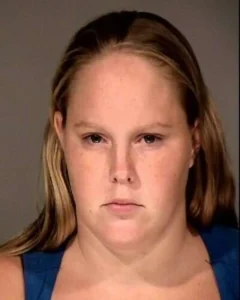
Richard Glossip was sentenced to death by the State of Oklahoma for the murder of Barry Van Treese
According to court documents Richard Glossip and Justin Sneed both worked for Barry Van Treese who owned a motel. Glossip would hire Justin Sneed to murder Barry Van Treese. Trese would be beaten to death by Sneed.
Justin Sneed would be arrested and quickly turned on Richard Glossip in exchange for a life sentence
Richard Glossip would be sentenced to death
Update – May 2026 – Richard Glossip sentence was overturned and he was set free
Richard Glossip Photos

Richard Glossip Now
Gender: Male
Race: White
Height: 5 ft 10 in
Weight: 209 lbs
Hair Color: Brown
Eye Color: Blue
OK DOC#: 267303
Birth Date: 2/9/1963
Current Facility: OKLAHOMA STATE PENITENTIARY, MCALE
Reception Date: 9/13/2004
Richard Glossip Case
An Oklahoma appeals court on Thursday upheld the murder conviction of death row inmate Richard Glossip, paving the way for Glossip to be executed on May 18, despite the state attorney general’s concerns about some testimony and evidence.
Glossip can still plead his case for clemency to the five-member Oklahoma Pardon and Parole Board, which could recommend that the governor spare the prisoner’s life by commuting his sentence to life in prison without parole.
Glossip has been scheduled for execution before and three separate times came within hours of being put to death
The Oklahoma Court of Criminal Appeals’ ruling said his case “has been thoroughly investigated and reviewed,” with Glossip given “unprecedented access” to prosecutors’ files.
“Yet he has not provided this court with sufficient information that would convince this court to overturn the jury’s determination that he is guilty of first-degree murder and should be sentenced to death,” according to the ruling written by Judge David Lewis.
Glossip’s attorney, Don Knight, said he will continue to seek a new trial.
“It is unconscionable for the court to attempt to force the State to move forward with his execution,” Knight said. “We cannot permit this longstanding injustice to go unchallenged and will be filing for review of this manifestly unjust ruling in the United States Supreme Court.”
Now 60, Glossip has long maintained his innocence in the 1997 murder-for-hire killing of his former boss, Barry Van Treese, who owned the Best Budget Inn where Glossip worked as the manager. The motel’s handyman, Justin Sneed, admitted robbing Van Treese and beating him to death with a baseball bat, but claimed he did so only after Glossip promised to pay him $10,000 to do it.
Sneed, who ended up getting life in prison, was the key witness in two separate murder trials for Glossip, both of which ended in a conviction and death sentence.
Earlier this month, Oklahoma Attorney General Gentner Drummond urged the court to throw out Glossip’s conviction because he says Sneed lied to the jury about his mental health and drug use. Drummond said in his filing that Sneed’s misstatements, when combined with other problems in the case including the destruction of evidence, warrant a new trial.
The court’s ruling noted that Drummond, in a statement at the time, said he was not suggesting Glossip is innocent, but only that justice would not be served by executing him “based on the testimony of a compromised witness.”
“The attorney general’s ‘concession’ does not directly provide statutory or legal grounds for relief in this case,” according to the ruling,
Drummond said he respects the court’s opinion, but will still look into other ways to stop Glossip’s execution from taking place as scheduled.
“Ensuring the integrity of the death penalty demands complete certainty,” he said in a statement. “I will thoroughly review the ruling and consider what steps should be taken to ensure justice.”
One of Glossip’s scheduled executions was halted in September 2015 when prison officials realized they had received the wrong lethal drug, a mix-up that helped prompt a nearly seven-year moratorium on the death penalty in Oklahoma.
Glossip’s case attracted international attention after actress Susan Sarandon — who won an Academy Award for her portrayal of death penalty opponent Sister Helen Prejean in the 1995 movie “Dead Man Walking” — took up his cause in real life. Prejean herself has served as Glossip’s spiritual adviser and frequently visited him in prison. His case also was featured in the 2017 documentary movie “Killing Richard Glossip.”
https://apnews.com/article/oklahoma-execution-richard-glossip-82b2c417dcd9dd63bfb46aafff458729
Richard Glossip Sentence Overturned
After nearly three decades on death row and nine near-executions, Richard Glossip has been released on bond as he awaits a retrial in the 1997 murder of his boss.
The ex-death row inmate was first convicted and sentenced to death in 1998 after being found guilty of ordering the fatal beating of his boss, Barry Van Treese, per CNN. That conviction was overturned in the early 2000s after the Oklahoma Court of Criminal Appeals ruled that he received ineffective legal representation during his trial.
However, in 2004, his second trial ended with him being convicted and sentenced to death again, per CNN. For the last few decades, he had been scheduled for execution nine times ahead of his conviction being overturned by the Supreme Court in 2025, per CNN.
On May 14, his decades-long legal saga took a turn when he was released on bond. According to the Associated Press, Glossip walked out of the jail holding hands with his wife, Lea Glossip.
“I’m just thankful for my wife and my attorneys. Just thankful,” he said, per the outlet. “It’s overwhelming, but it’s amazing at the same time.”
Here’s everything to know about why Richard Glossip was released on bond after nearly 30 years on death row.
Glossip was found guilty of ordering the 1997 killing of his boss, Treese, the owner of an Oklahoma City motel where Glossip was working, per the AP.
Treese was allegedly beaten with a baseball bat in what prosecutors have claimed was a murder-for-hire scheme in 1997. Prosecutors alleged that Glossip promised the motel handyman, Justin Sneed, $10,000 to kill Treese, per The New York Times.
During trial, Sneed pleaded guilty to first-degree murder under a deal in which he would testify against Glossip, according to The New York Times.
Glossip was first convicted of capital murder in 1998, a decision that was overturned in 2001 due to ineffective defense counsel, per the outlet. However, in 2004, he was reconvicted and sentenced to death again.
His execution has been rescheduled nine times since 2015 for a number of reasons, including the court evaluating his appeals, per CNN.
In May 2023, the Supreme Court granted a stay of execution for Glossip after Oklahoma’s attorney general made a plea to stop what he said would have been an “unthinkable” error, according to The New York Times.
Glossip has long maintained his innocence, with his legal team arguing that there were faults throughout the trial that found him guilty.
There have also been investigations carried out over the years that have cast doubt on Glossip’s involvement in the beating, with his lawyers and supporters arguing that Sneed carried out the killing independently, per The New York Times.
According to interviews from inmates incarcerated with Sneed on separate charges, the former handyman said he acted alone to rob Treese of money that he and his girlfriend intended to use to buy drugs, per the outlet.
Sneed also has a history of mental illness, which had not been previously disclosed. None of the inmates’ accounts were heard by the jurors when Glossip had been convicted and sentenced, according to The New York Times.
In February 2025, the Supreme Court overturned Glossip’s 2004 conviction and death sentence, per CNN.
Attorney general Gentner Drummond asked the justices to throw out Glossip’s 2004 conviction and order a retrial. Then, Justice Sonia Sotomayor said prosecutors failed to correct false testimony from their star witness — Sneed — which violated Glossip’s due process rights, per The New York Times.
According to the outlet, new notes had recently been disclosed that appeared to contradict Sneed’s testimony about whether he had been treated by a psychiatrist. The notes seemed to show he had been diagnosed with bipolar disorder.
It then became evident that the prosecutor, Connie Smothermon, failed to correct Sneed’s false testimony. Lawyers for Glossip and the state said that it was a violation of the Supreme Court’s 1959 decision in Napue v. Illinois, which prohibits prosecutors from knowingly presenting false testimony.
After Glossip was granted a new trial, one of his lawyers, Don Knight, said they were “thankful that a clear majority of the court supports longstanding precedent that prosecutors cannot hide critical evidence from defense lawyers and cannot stand by while their witnesses knowingly lie to the jury,” per The New York Times.
“Rich Glossip, who has maintained his innocence for 27 years, will now be given the chance to have the fair trial that he has always been denied,” Knight’s statement continued.
That June, it was announced that Glossip would get a new trial, however a judge denied his bond in July, per CNN.
He was released from prison in May 2026
Glossip was released from prison on May 14, after Judge Natalie Mai of the District Court of Oklahoma County issued an order that set his bond at $500,000, per The New York Times.
The ex-death row inmate must wear an electronic monitoring device and cannot contact any witnesses in the case. Glossip also submitted to a pretrial monitoring program and will not be able to travel outside Oklahoma, per the outlet.
Shortly after, Knight said that the ruling was unexpected but provided a step forward in Glossip’s efforts to escape a “decades-long nightmare.”
“I suspect he’s going to be overwhelmed for quite some time,” Knight told the outlet. “You don’t almost get killed nine times by the state, or have three last meals — you don’t have that happen to you without it really, really scarring you.”