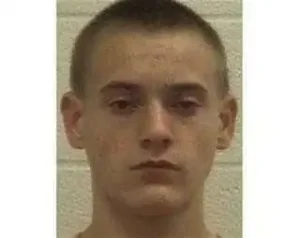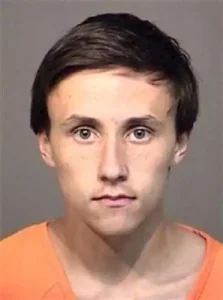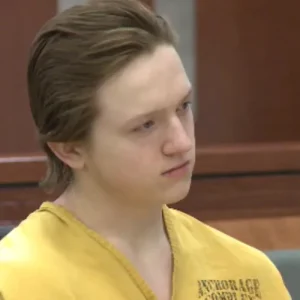
Sarah Gonzales-McLinn is a killer from Kansas who would be convicted of the murder of Harold Sasko who she says forced her into the sex trade
According to court documents Sarah Gonzales-McLinn would move into the home of Harold Sasko when she was seventeen years old. Soon after Sarah turned eighteen years old Sasko would demand that she would have sex with him and that she owed him thousands of dollars to cover the support he had been providing her.
Sarah Gonzales-McLinn would admit to heavy drinking in order to have sex with Harold Sasko several times per week for over ten months.
Eventually Sarah Gonzales-McLinn would get tired of the abuse and she would reach a point where she believed her only option was to kill herself or kill Harold Sasko
According to police reports Harold Sasko was plied with sleeping pills, bound with zip ties and had his throat slit which led to his death
Sarah Gonzales-McLinn would be arrested and made a full confession to police. At trial she did not deny killing Harold Sasko but attempted to put forth a mental health defense. In the end she would be convicted and sentenced to fifty years in prison. Later on appeal it would be reduced to twenty five year.
Sarah Gonzales-McLinn Current Information

GONZALES-MCLINN, SARAH BROOKE
(KDOC # 2000080128)
Current Location (2) Topeka CF-Central
Earliest Possible Release Date (1) Feb 01, 2039
Sarah Gonzales-McLinn Case
In January 2014, Sarah Gonzales-McLinn confessed to law enforcement officers that she killed Hal Sasko. At her trial on a charge of first-degree premeditated murder, McLinn did not deny that she killed Sasko but argued she was not criminally responsible because a mental disease or defect prevented her from forming the culpable mental state necessary to convict her of the charge. The jury nonetheless convicted McLinn of first-degree premeditated murder. Then, during the sentencing proceeding, the jury determined McLinn murdered Sasko in an especially heinous, atrocious, or cruel manner, and the district court ultimately imposed a hard 50 life sentence.
On appeal, Sarah Gonzales McLinn raises numerous arguments which relate to her mental disease or defect defense, including several jury instruction issues. McLinn contends these and other errors require us to reverse her conviction. Although we determine the district court committed one instructional error, we determine the error was harmless and we affirm McLinn’s conviction.
Sarah Gonzales-McLinn also raises five issues arising from sentencing proceedings. We reject all but one of McLinn’s sentencing issues: The district court erred in ordering postrelease supervision rather than parole. To remedy this error, we remand this case to the district court for resentencing.
Facts and Procedural Background
A police officer discovered Sasko’s body inside his Lawrence home on January 17, 2014. Sasko’s hands were bound with zip ties. Other zip ties, some used and cut and some unused, were scattered near his feet. The police observed blood patterns and drops throughout the house and a blood smear above Sasko’s head. Beer cans were strewn about, and three of them contained residue from a sleeping pill. A toxicology analysis on Sasko’s system showed sleeping pills in an intoxicating concentration. A forensic pathologist testified at trial that Sasko died of stab and slicing wounds to his neck and that Sasko had no defensive wounds. The pathologist offered detailed testimony about the gruesome nature of the injury; suffice it to say, here, that Sarah Gonzales-McLinn cut through Sasko’s neck and cut or sawed through most of the soft tissue surrounding the spine.
Sasko’s car was missing, as was McLinn’s dog, and when the police discovered McLinn’s cell phone on the kitchen counter they became concerned she had been kidnapped. The police immediately began looking for McLinn and issued a nationwide alert for Sasko’s car.
The police learned Sasko’s car entered the Kansas turnpike early in the morning on January 14, 2014, and exited the turnpike near the Oklahoma border later that morning. Later, McLinn’s family alerted the police she had tried to call her grandmother; those phone calls originated from convenience stores along the route from Kansas to Texas. Video surveillance showed it was McLinn, alone, who had made those calls, and the police eventually determined Sarah Gonzales-McLinn was a person of interest in the homicide. About a week later, Lawrence police officers learned the National Park Service had taken McLinn into custody near Miami, Florida.
A Lawrence police detective interviewed Sarah Gonzales-McLinn in Florida for about three hours on January 26, 2014. At trial, the detective testified McLinn indicated she knew the interview was about Sasko’s death, and she told the detective she had killed Sasko because she wanted to see how it felt to kill someone. She elaborated on the preparations she had made in advance of killing Sasko, which included falsely covering her absence from work and gaining time to get out of town by telling her coworkers she had a death in the family.
As for the actual murder, McLinn explained she crushed up some sleeping pills and put them in Sasko’s beer. Later, Sasko stood up, stumbled, and passed out face-first on the floor. McLinn zip-tied Sasko’s ankles and wrists while he was unconscious, but, as she tied Sasko’s wrists, he woke up and mumbled something and then passed out again. McLinn told the detective she was having second thoughts at that point, but, according to the detective, she “resigned herself that she was going to kill Mr. Sasko and continued to bind his wrists.” McLinn retrieved a hunting knife from her bedroom and knelt near Sasko’s head. She felt for Sasko’s carotid artery and then “plunged the knife into his neck until it hit something, which she believed was the carpet.” Then, using both hands in “a sawing motion,” she “pulled the knife towards her so that it cut his neck.” Sarah Gonzales-McLinn told the detective she had thoughts of killing someone for two years and “resigned on Mr. Sasko within five days preceding the murder.”
After Sarah Gonzales-McLinn was charged with premeditated first-degree murder, she raised the defense of mental disease or defect. She alleged she suffered from dissociative identity disorder, or DID, which used to be known as “multiple personality disorder.” The defense’s expert witness, Dr. Marilyn Hutchinson, introduced the phrase “System of Sarah,” which she explained was “not uncommon nomenclature for people who work with [DID].” Dr. Hutchinson talked to four personalities or identities in McLinn’s case—Alyssa, Vanessa, Myla, and No Name. Dr. Hutchinson explained that when she used the phrase “System of Sarah,” she was referring to “all of the personality parts and fragments that reside in the body known as Sarah McLinn.”
Dr. Hutchinson testified she had met with Sarah Gonzales-McLinn several times over several months, for a total of 17.5 hours. In the beginning, Dr. Hutchinson noticed McLinn had “some unusual language patterns”—she “sometimes referred to herself in the plural, ‘we,’ ‘us,’ ”—and there were unusual gaps in her memory. Dr. Hutchinson “began to suspect that there was something other than depression or anxiety.” She administered several standardized tests and also performed a clinical interview, which she designed to test for DID by using an interview structure set out in the Diagnostic and Statistical Manual of Mental Disorders (DSM-5).
Dr. Hutchinson ultimately diagnosed Sarah Gonzales-McLinn with, among other things, DID. Dr. Hutchinson explained that this diagnosis did not describe a person with “this sort of collection of personalities, sort of like this is a family that is all walking around in one body.” Instead, “it really is more like the person’s identity, who they are, the self, ․ there isn’t a one person there, that the self is in fragments. That self is dissociated or split apart into pieces and there is not a whole.”
Dr. Hutchinson then explained the criteria for a DID diagnosis, as set forth in the DSM-5. “The major criteria is a disruption of identity characterized by two or more distinct personality states,” she began, and “[i]t involves marked discontinuity in the sense of self and sense of agency.” According to Dr. Hutchinson, “The discontinuity and sense of self, the sense of agency, their perception, their cognition or their sensory motor functioning”—“everything”—could be affected by disruption of identity. Dr. Hutchinson also opined McLinn met the two secondary DSM-5 criteria for DID: First, she had “recurrent gaps in the recall of everyday events because what one person does, one personality, one piece of the identity does isn’t usually known by the others. Sometimes they know, but that clearly isn’t always true.” Second, she exhibited “clinically significant ․ stress or impairment” caused by the symptoms; Dr. Hutchinson explained “you can’t just have [DID]. It has to matter.
Dr. Hutchinson offered extensive testimony about Sarah Gonzales-McLinn’s mental health history, drug and alcohol use, childhood trauma, family experiences, sexual abuse, her relationship with Sasko, mental health medications, and her performance on diagnostic and mental status tests. Highly summarized, Dr. Hutchinson offered her opinion that McLinn could not form intent. She explained that “forming an intent is a rational thought” and McLinn “did not have the capability of a rational thought because she didn’t, at the time of that, have access to all the parts of her that would go into making a rational choice like it works for the rest of us.”
Vanessa, who was “quiet, soft-spoken, apologetic, often tearful, horrified at what had happened, scared,” was going to commit suicide to escape her circumstances with Sasko. Myla, who was more confident than Vanessa and whose role “was to be the mother of Vanessa because Vanessa couldn’t take care of herself,” communicated Vanessa’s suicide plans to the System of Sarah. Alyssa did not want Vanessa to “kill all of us,” and Alyssa’s only idea to get out of the situation was to kill Sasko. According to Dr. Hutchinson, “Alyssa ․ perceived the greatest act of love she could do to protect the rest of the System was to kill Mr. Sasko.” Dr. Hutchinson explained that Alyssa drugged Sasko and bound him, but it was Vanessa who briefly regained control and cut the ties. Then Alyssa took over, retied Sasko’s hands, and killed him.
Dr. Hutchinson also testified that “premeditation has, by definition, malice and aforethought, and without respect for life, and it was my conclusion that Alyssa made the choice that to save the life of the System, she had to take the life of Mr. Sasko.” At the State’s request, the district court admonished the jury to disregard Dr. Hutchinson’s statement about the definition of premeditation, as it would instruct the jury on the law later, “and the definition given [by Dr. Hutchinson] is a bit contrary to the law.”
The State had asked Dr. William Logan, a physician and clinical psychiatrist, to evaluate Sarah Gonzales-McLinn and give his professional opinion as to whether she was capable of forming the intent to kill Sasko. At trial, Dr. Logan testified he did not find “any mental disorder that rose to the level that it would have prevented her from forming intent.” He noted that the DSM-5 carried cautionary instructions for its use in forensic settings, notably that a “diagnosis alone doesn’t equate to any one particular legal conclusion because diagnoses vary in severity and the diagnosis alone doesn’t, by itself, tell you how that individual is able to function in that particular setting or what they are capable of doing.”
Dr. Logan, like Dr. Hutchinson, found Sarah Gonzales-McLinn’s personal history “significant in that she had undergone a number of traumas,” including being molested by a neighbor when she was a young child and dealing with her parents’ divorce. He also testified that McLinn’s schooling experience was “difficult” because a period of early homeschooling left her “kind of deficient in social interaction” and then she attended numerous different schools over the years, which forced her to make “a number of transitions.”
Dr. Logan testified he had reviewed Dr. Hutchinson’s report, and “[t]he significant thing about the report,” he explained, was that “she really didn’t explain how the [DID diagnosis] went to the issue of whether or not Miss McLinn could form intent”—although he acknowledged the report was later amended. Dr. Logan did not have strong opinions about whether McLinn had DID. “I think certainly it’s a possibility,” he stated, and, “I don’t know that I could confirm it but I respect Dr. Hutchinson and she spent a great number of hours with [McLinn].” He also stated, “I certainly think at this juncture Miss McLinn believes she has the disorder.” In Dr. Logan’s opinion, McLinn had a strong history for depression and anxiety, some reported symptoms consistent with post-traumatic stress disorder, and “it is possible that she has [DID].” In short, Dr. Logan was “open” to Dr. Hutchinson’s diagnosis, but he “didn’t think that it reached the level that it prevented her from forming an intent to kill Mr. Sasko.” In his opinion, “with a reasonable medical certainty,” McLinn could form intent to kill Sasko on January 14, 2014.
The jury found Sarah Gonzales-McLinn guilty of first-degree premeditated murder. The district court then informed the jury there would be a separate penalty phase proceeding, as the State had previously given notice of its intent to seek a hard 50 sentence. The jury thereafter found McLinn committed murder in an especially heinous, atrocious, or cruel manner. The district court ultimately sentenced Sarah Gonzales-McLinn to life imprisonment, without possibility of parole for 50 years, followed by lifetime postrelease supervision. McLinn appealed the guilty verdict, the denial of her motion for a new trial, and her sentence.